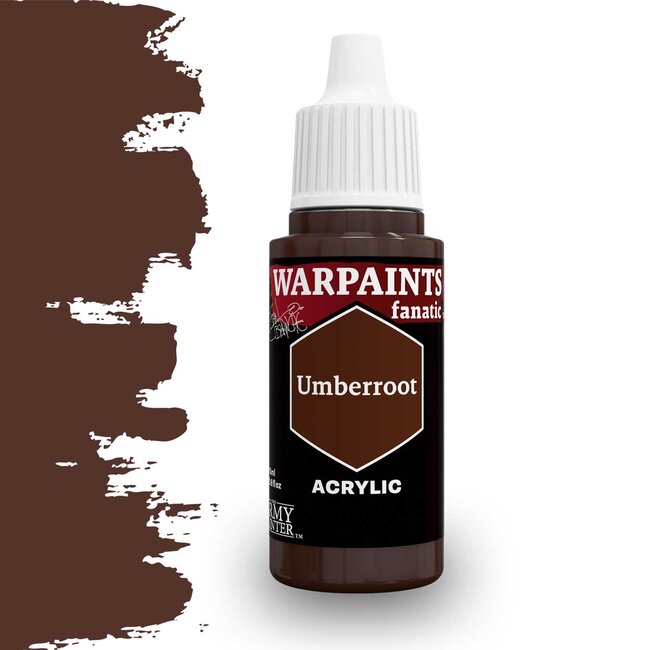
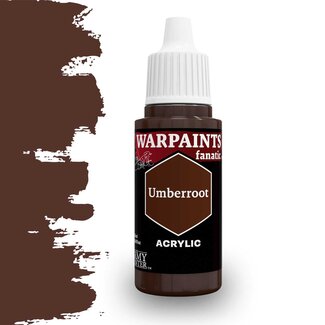
Umberroot is a dark, warm reddish brown from The Army Painter's Warpaints Fanatic John Blanche Masterclass range. This 18ml. acrylic originally appeared in John Blanche Masterclass Volume 4 and provides a versatile earth tone for wood, leather, soil, dark flesh, weathered equipment, terrain and deep warm shadows across miniatures.
What is Umberroot? Umberroot is a deep earthy brown with a noticeable warm reddish undertone. Its character sits closer to a rich umber or red-brown than a neutral dark brown. This allows the colour to feel natural and atmospheric at the same time: dark enough for shadows and weathered materials, yet warm enough to avoid the harder appearance produced by black.
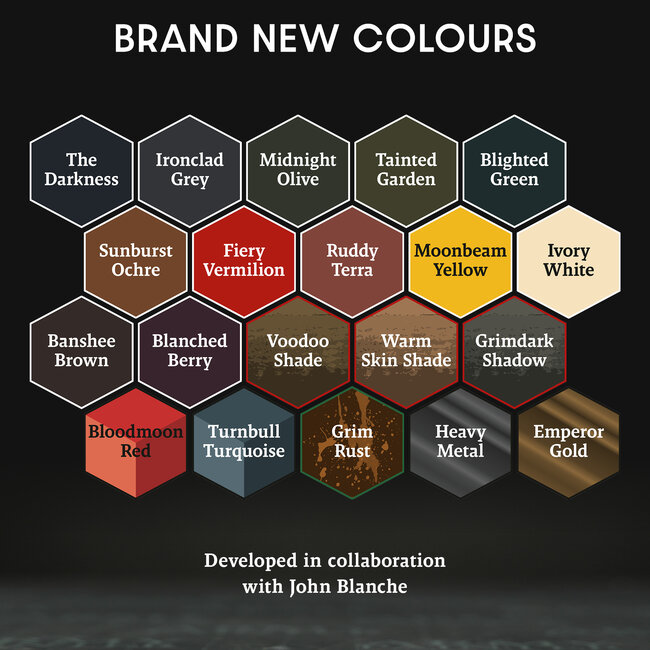
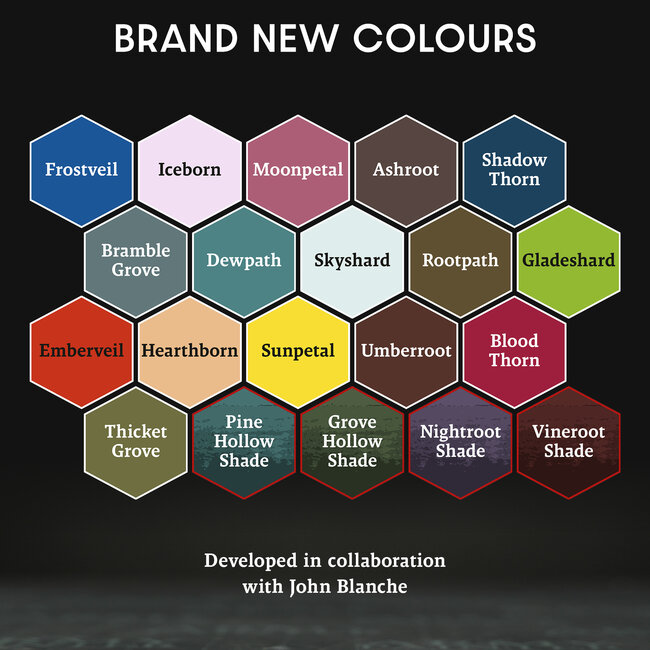
Umberroot originally appeared as one of the eight acrylic colours in John Blanche Masterclass Volume 4. This volume explores earthy warmth and fiery intensity through browns, ochres, oranges and striking greens and yellows. Developed in collaboration with John Blanche, these colours are intended to support depth, atmosphere and visual storytelling. Umberroot provides a useful dark foundation against which the brighter colours of such a palette can stand out.
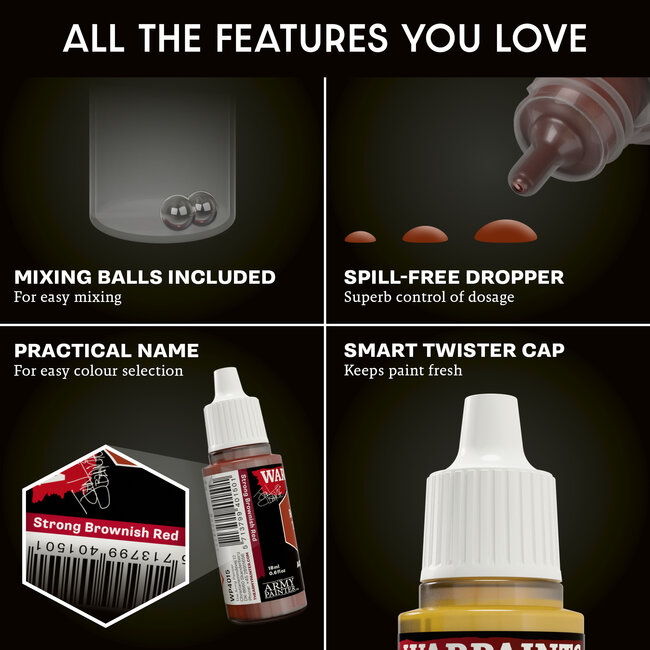
It is a conventional Warpaints Fanatic acrylic paint, rather than a wash, Speedpaint, metallic or effect paint. The Fanatic formulation uses dense pigmentation in a premium resin base with stabilisers for smooth application. It can be thinned significantly while maintaining good pigment dispersion. This allows Umberroot to work as an opaque colour as well as for thin layering, glazing, blending and controlled weathering.
How do you use Umberroot? Shake the bottle thoroughly and work with thin layers where possible. For a dark brown surface, build Umberroot directly as the main base colour. For greater depth, shade the recesses with an even darker brown or suitable wash before restoring Umberroot across the midtones. Highlights can then be developed by mixing or combining it with lighter earth, beige or ochre colours.
For wood and tree bark, Umberroot makes a practical foundation. Paint beams, planks, roots or tree trunks with the reddish brown before defining grain and raised textures with lighter browns. On terrain, the same process can be accelerated with stippling or drybrushing. Its warm undertone keeps wood visually rich even after dark washes, dirt or moss effects have been introduced.
Across leather and weathered equipment, Umberroot works naturally for belts, bags, boots, holsters, saddles and scabbards. Begin with the colour as a dark foundation and build lighter browns primarily along edges, folds and areas of wear. Small scratches in a paler colour can suggest old, heavily used leather. A thin glaze of Umberroot can then help reconnect highlights that have become too sharp with the underlying colour.
The warm reddish brown also offers useful options for flesh. Umberroot can act as a foundation or deep shadow within darker and warmer skin palettes. Gradually build lighter brown, red-brown or warm flesh colours across raised areas. For grimdark characters, transitions can be kept more irregular, with touches of red, purple or olive introduced selectively to create additional variation and character.
For earth, bases and terrain, Umberroot suits mud, dry soil, exposed roots, rocky ground and dirty ruins. Combine it with darker brown in recessed areas and lighter sand or ochre tones across raised textures. A restrained drybrush can quickly make stones and ground texture more readable. Vegetation and localised green or grey colours can then be added to break up larger areas.
Umberroot is also useful for weathering and rust-like colour progressions. Place the reddish brown around chips, rivets and metal joints before introducing smaller orange or lighter rust accents. Because Umberroot is a standard acrylic rather than a dedicated rust effect, the shape and intensity of each mark remain under your control. Stippling and small irregular patches help keep weathering from looking too uniform.
Finally, the colour performs well as a warm shadow beneath the brighter shades associated with Volume 4. Under orange-red, ochre, beige and yellow, Umberroot can establish strong but harmonious shadows. It also creates useful temperature contrast against cool blue-greens and greys. This makes it a practical connecting colour on miniatures that combine natural materials, flesh, clothing and weathered metal.
Umberroot is suitable for beginners and advanced miniature painters alike. Beginners get a versatile dark brown for many common miniature materials, while experienced painters can use its warm undertone for flesh, glazes, weathering and subtle colour contrasts. Its greatest advantage is versatility: one earthy colour can support strong shadows, natural base colours and convincing weathered transitions throughout a complete miniature or terrain project.

Find the order you'd like to withdraw
Enter your email address and order number.
Check your mailbox
If your details match an order, you'll receive an email with a link to view and manage it.