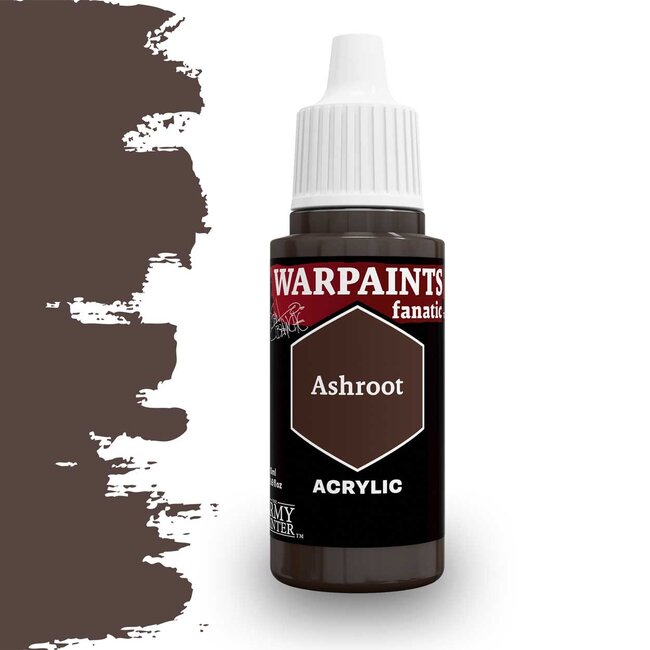
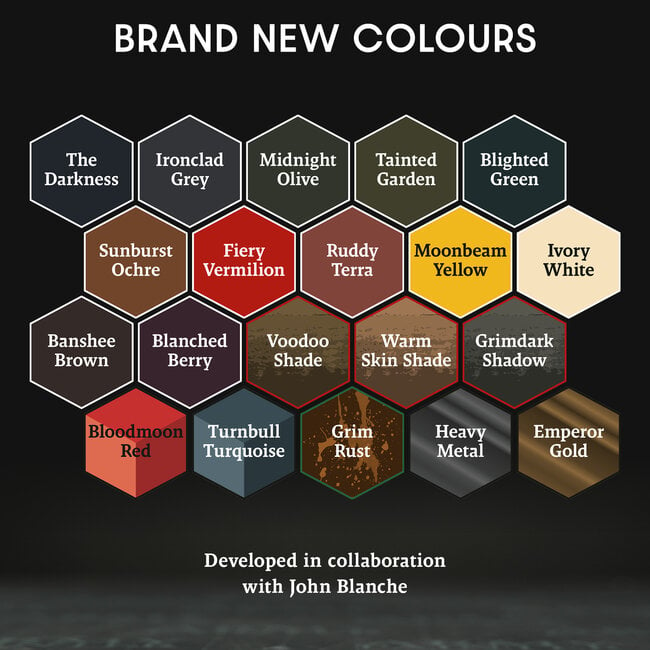
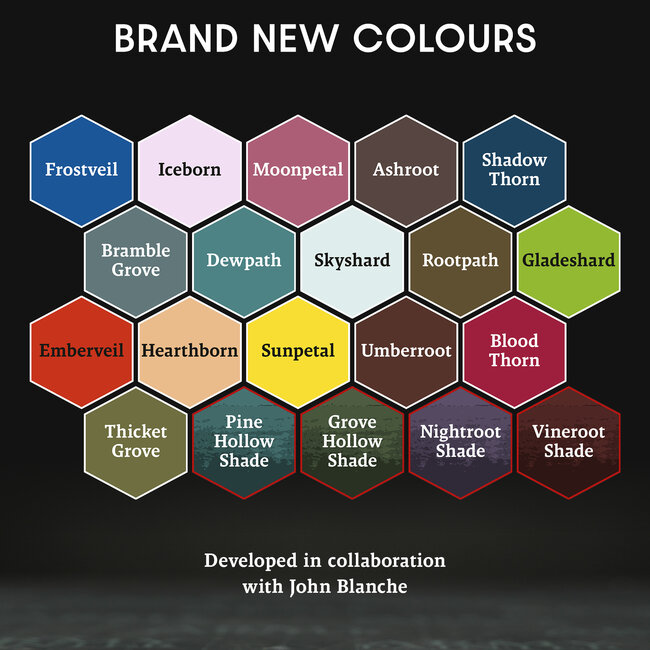
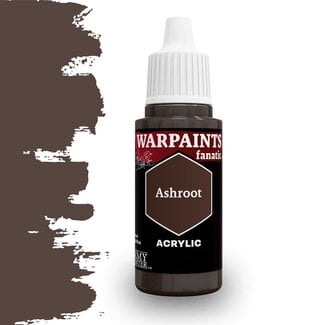
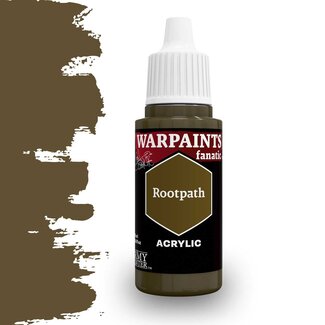
Ashroot is a dark, muted ash-brown grey Warpaints Fanatic acrylic from The Army Painter's John Blanche Masterclass range. This 18ml. paint originally appeared in John Blanche Masterclass Volume 3 and is particularly useful for wood, roots, leather, soil, dark skin, weathered fabrics and natural grimdark shadows.
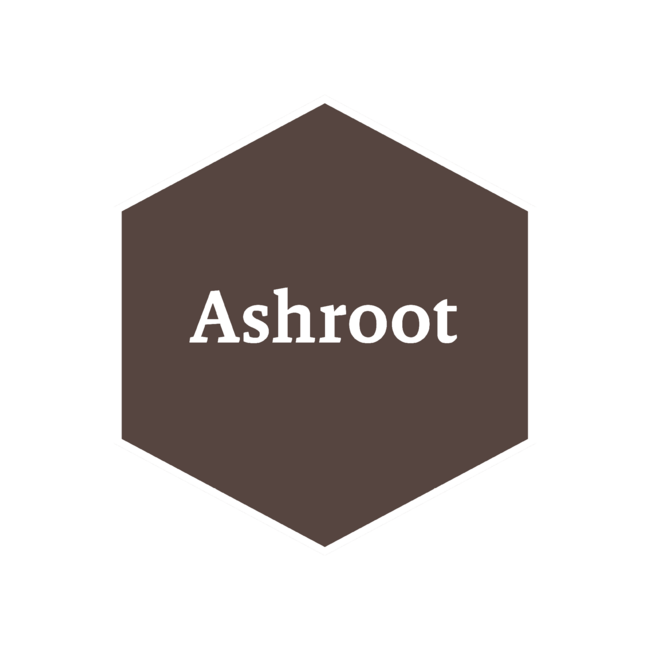
What is Ashroot? Ashroot is a desaturated dark brown with a distinct grey character and a subtle violet undertone. This makes it cooler and smokier than a conventional warm chocolate or red-brown. The colour suggests charred timber, damp forest soil and weathered roots. Developed in collaboration with John Blanche, Ashroot fits naturally into the cold, mysterious and spectral atmosphere of Masterclass Volume 3.
Ashroot is a conventional Warpaints Fanatic acrylic paint, rather than a wash, Speedpaint, metallic or effect paint. The Fanatic formulation is designed for strong coverage, dense pigmentation and smooth brush application. It can also be thinned considerably while maintaining useful pigment dispersion. This allows Ashroot to work both as an opaque base colour and in thinner applications for glazing, blending and controlled shadow work.
How do you use Ashroot? Shake the bottle thoroughly and apply the paint in thin layers. For natural materials, Ashroot can be used directly as a dark foundation. Keep the colour visible inside grain, cracks and other recesses before building lighter browns, taupes or greys across the raised areas. This quickly creates depth without forcing you to use pure black for every shadow.
For wood, bark and roots, Ashroot provides a natural foundation. Paint the complete surface and allow it to dry before introducing lighter earth colours through layering or drybrushing, leaving Ashroot visible in the deepest texture. A selective dark wash can add further contrast. This approach works across tree trunks, staffs, wooden weapon shafts, crates, palisades, ruins and woodland bases.
Leather also benefits from its muted character. Ashroot gives belts, bags, boots, holsters and worn equipment a cool, aged foundation that suits grimdark miniatures particularly well. Highlight edges with a lighter grey-brown or earthy colour and add fine scratches where the material would logically receive wear. Brown, black or greenish washes and glazes can then introduce dirt and additional variation.
Ashroot is also interesting for dark skin and organic surfaces. Its muted brown-violet character can provide a foundation for deeper skin tones, followed by progressively warmer or lighter browns across cheekbones, noses, muscles and fingers. The subtle violet quality is equally useful for monsters, undead creatures and weathered flesh when a colder or less healthy appearance is required. Thin layers provide more control than one heavy opaque coat.
For clothing, use Ashroot on cloaks, trousers, gloves, bags and coarse fabrics. Combine it with taupe, beige or muted grey for worn textiles, or pair it with dark violet and black for a more sombre result. Stippling and small irregular highlights can help suggest visual texture on wool, canvas and rough cloth rather than leaving these materials as perfectly smooth brown surfaces.
Across bases and terrain, Ashroot functions as a versatile earth colour. Use it for soil, mud, tree roots, dead timber, rocky ground and rubble. Stippling or drybrushing several lighter earth tones over the foundation quickly creates natural variation. Small touches of moss green, ochre or rust can prevent large brown surfaces from becoming too uniform and help connect the ground to the surrounding miniature.
One of Ashroot's main advantages is its ability to create dark shadows without the harshness of black. Across bone, skin, leather, cloth or wood, it can reduce the warmth of surrounding colours while introducing a smoky shadow. When heavily thinned, Ashroot can also function as a glaze for locally darkening and cooling transitions without completely covering the underlying paint.
Ashroot is suitable for beginners and advanced miniature painters alike. Beginners get a versatile dark earth colour that makes natural materials easy to define, while experienced painters can exploit its grey-brown and subtly violet nuances for skin, complex shadows and atmospheric glazes. Ashroot is particularly useful whenever a conventional brown or black shadow would become too warm, too saturated or visually too harsh.

Find the order you'd like to withdraw
Enter your email address and order number.
Check your mailbox
If your details match an order, you'll receive an email with a link to view and manage it.